CEA — Controlled Environment Agriculture
Fresh vegetables every month of the year, grown under glass with heat, light and CO₂ from the plant next door.
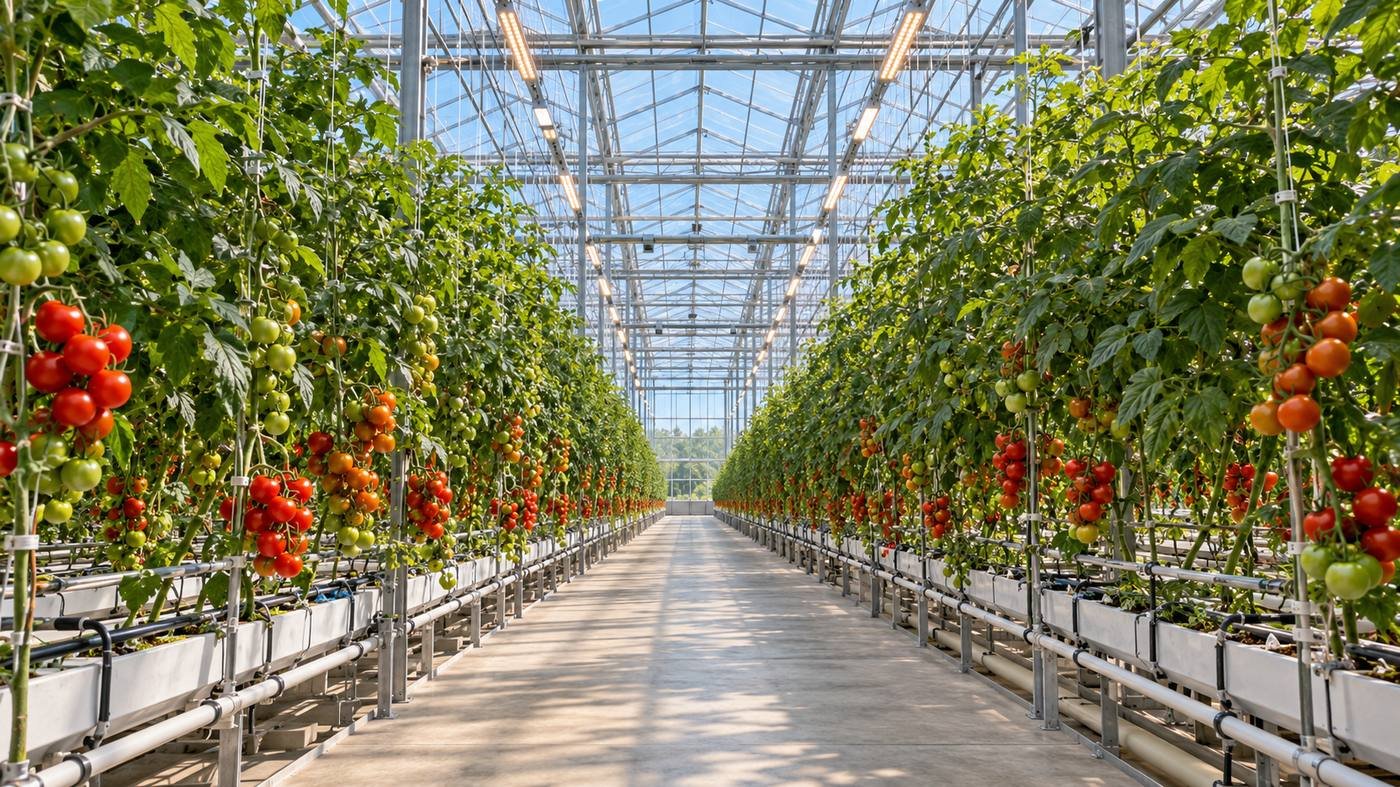
Controlled Environment Agriculture means growing inside a building where the grower sets the climate: temperature, humidity, light, carbon dioxide, water and nutrients. At Butte Valley that building is a 40-acre glass greenhouse built for high-wire vine crops such as tomatoes, cucumbers and peppers, under supplemental LED light so the crop keeps growing through the short days of winter.
The vines grow on hanging wires and are lowered as they lengthen, so one planting keeps producing for most of the year. Roots sit in clean growing media fed by drip lines, and the water that drains away is captured, cleaned and used again.
People and robots, working together
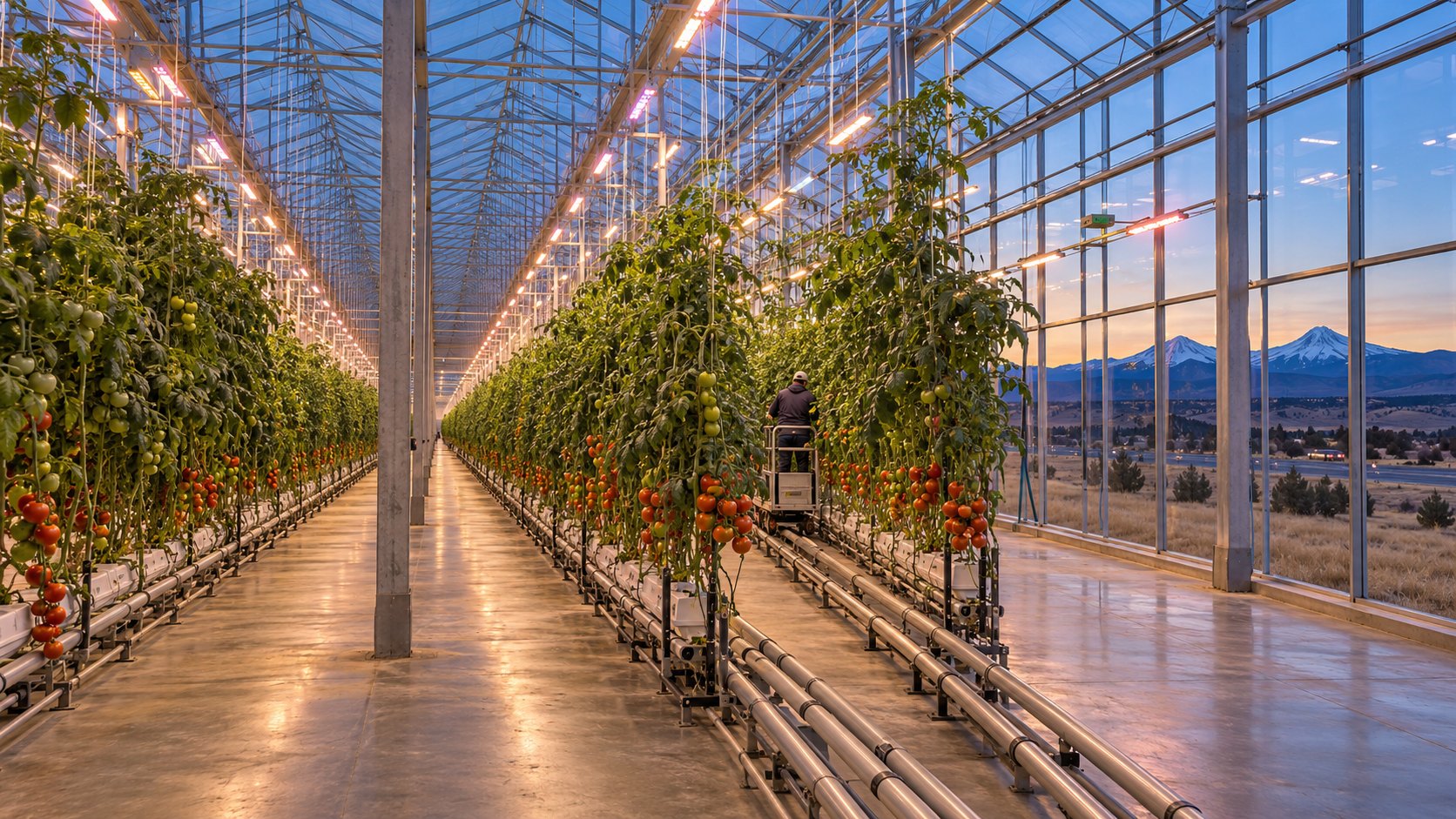
The greenhouses run on skilled growers working alongside robots. The robots ride the heating pipes between the rows around the clock. Cameras and sensors watch every plant and the climate around it, robots trim the lower leaves as the vines grow, and robots harvest the ripe fruit. The people run the crop: they set the growing plan, check what the machines find, and handle the work that takes a human hand.
Source.ag's software watches crops in more than 500 greenhouses in 25 countries, forecasting harvests weeks ahead and spotting problems early.
A leaf-cutting robot for tomato crops that works around the clock beside the greenhouse staff. Priva puts it at over 85% effectiveness covering a hectare a week, and a first series of 50 robots is in use.
A fully autonomous robot harvesting truss tomatoes in Zeeland, the Netherlands, since September 2025. It uses AI to judge ripeness and make clean cuts, and is built to run up to 22 hours a day, seven days a week.
Who is doing it now
A greenhouse built beside Rocky Mountain Power's Currant Creek power plant. It connects to the plant's exhaust stacks, stores the waste heat to warm the greenhouse, feeds the exhaust CO₂ to the tomato crop and uses the condensed water for irrigation. The State of Utah named it Energy Innovator of the Year.
A 45-hectare (about 111-acre) tomato greenhouse running on its own gas-engine power plants, 36 megawatts in all. The engines light and heat the glass, the CO₂ is cleaned and fed to the crop, and surplus power goes to the grid.
At Butte Valley
- A partner model, not a landlord model: VetaNova builds the site, the plant and the water system, and each growing partner runs its own house.
- Four 40-acre lit greenhouses, built one a year, each run with its own growing partner.
- Skilled growers and robots together: robots observe, trim and harvest on the pipe rails around the clock, and people run the crop.
- Electricity, heat and CO₂ metered in from the cogeneration plant next door.
- Water from the project's own decreed rights.
- Packing and truck loading on the road beside the glass, with Interstate 25 minutes away: north to Pueblo, Colorado Springs and Denver, south to New Mexico and Texas.
Sources: Wageningen University, Water use efficiency of tomatoes in greenhouses and hydroponics; Produce Grower, Houweling's wins Utah Energy Innovator award; FOX 13 Utah; POWER Magazine, Royal Pride Holland; Future Farming, Priva Kompano; Fruitnet, Eternal.ag at Van Noord Growers; HortiDaily, Source.ag.