CoGen — One Fuel, Used Twice
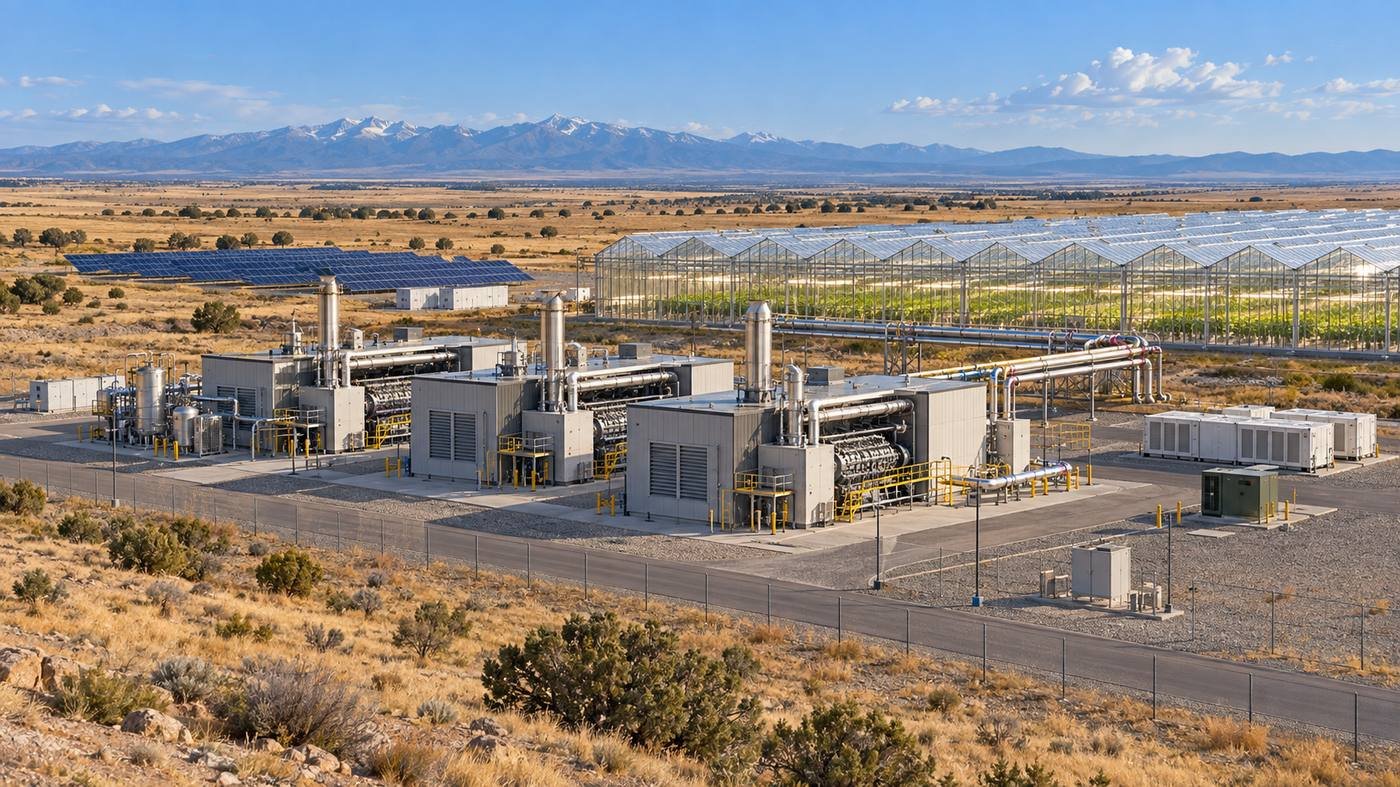
The plant makes the electricity, and the heat and CO₂ a stand-alone power plant throws away go to work in the greenhouses.
A regular power plant burns fuel to make electricity and sends most of the energy up the stack as waste heat. A cogeneration plant, also called combined heat and power, captures that heat and puts it to use. At Butte Valley the heat warms the greenhouses, and the CO₂ in the engine exhaust is cleaned and fed to the crop, where it makes the plants grow faster.
Gas reciprocating engines carry the load, with a solar field and four-hour battery storage alongside. The plant runs behind the site's own meter and keeps a utility connection for standby and for selling surplus power.
Who is doing it now
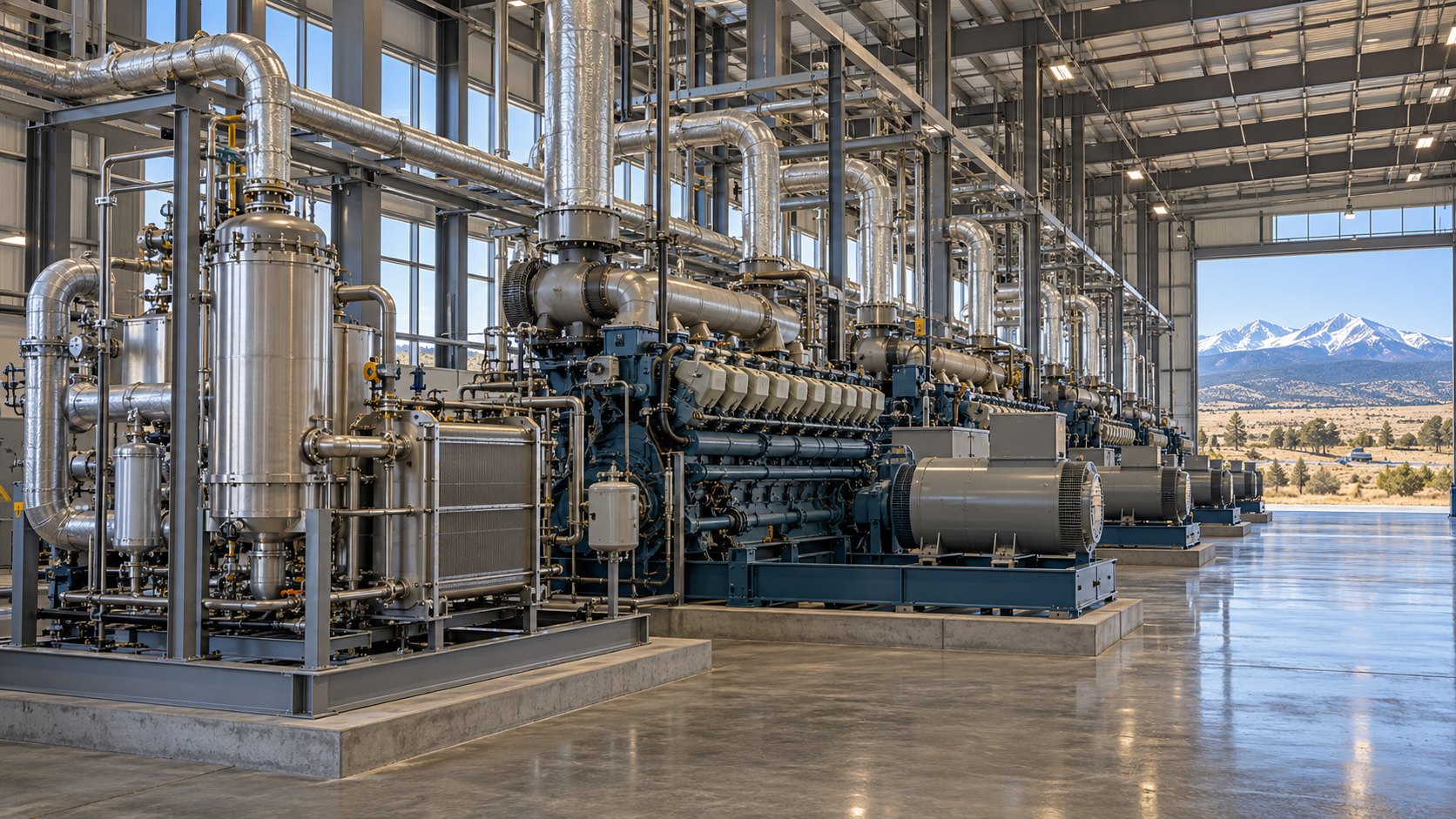
Eleven gas engines totaling 36 megawatts power a 45-hectare tomato greenhouse. The electricity lights the crop, the heat warms the glass, and the CO₂ is captured, purified and fed to the plants. GE puts the site's total energy use at 95% of the fuel, with 14% less CO₂ than making the heat and power separately.
The American example: a greenhouse tied to the exhaust of a neighboring power plant, using its waste heat, CO₂ and condensed water to grow tomatoes.
At Butte Valley
- The plant grows in step with the glass: about 17 MW for each greenhouse, about 67 MW with all four houses lit, and about 105 MW with the data center.
- Electricity sold to the greenhouses and the data center at the cost of making it.
- Partners on the same site under long-term agreements, and a round-the-clock data center load to fill the engines' hours.
- No wait in a Front Range interconnection queue.
Sources: U.S. EPA, Combined Heat and Power; POWER Magazine, Royal Pride Holland; Horticulture Week, Dutch glasshouse CHP output; Produce Grower.